
New Canaan Previous Residents by Era
New Canaan previous residents appear in layers, and each layer was created for a different reason. The Town Clerk supplies recorded interests. The Assessor adds parcel and building context. Directories and census pages contribute dated household clues, while Sanborn maps and permits date structures rather than every person. Probate files explain a final owner or heir transition. The table keeps each source's years and access channel visible instead of treating every record as one current list.
| Source | Years It Covers | Where Held | What It Shows |
|---|---|---|---|
| New Canaan Town Clerk land records | Vault reaches to 1801; online start not located | New Canaan Town Clerk; index and office images | Deeds, mortgages, liens, maps, legal descriptions, parties |
| New Canaan Assessor history | 1930-present cards if available; pre-1965 at Historical Society | New Canaan Assessor and Historical Society | Owner, building, parcel, assessment and permit context |
| NARA Darien/New Canaan directories | 1918-19, 1921-24, 1926, 1928, 1930, 1932, 1934-35 | NARA research table and verified collection lead | Dated names and addresses |
| New Canaan LOC telephone directories | 1930-32 and 1952-55 runs identified | Library of Congress | Subscribers, exchanges, roads, businesses |
| New Canaan federal census | Public through 1950 under the 72-year rule | NARA, FamilySearch, Ancestry at library | Household relationships, ages, occupations, geography |
| New Canaan Sanborn maps | 1884, 1889, 1895, 1901, 1906, 1912 | Library of Congress | Footprints, street labels, land-use clues |
| Newspapers, probate, obituaries | Year and collection dependent | Library, Historical Society, Probate | Death, marriage, estate, civic, and address leads |
Pick the row matching your era. Then confirm it with a second source that shares a parcel, name, date, or address. A single record is only a lead. The New Canaan Directory Book develops the full directory collections and how to read them.
New Canaan Previous Residents at Fox Run
The New Canaan sample parcel card for 147 Fox Run Road carries Unique ID 14464, MBL 46 118 81, 2.8200 acres, and volume/page 1093/639. Its owner-history rows list 1979, 1992, 1998, 2003, 2013, and 2024, each with an instrument label and price. Those New Canaan rows are a strong lead for a deed search. They are not a resident roster. Copy everything before moving on. Take the parcel ID, MBL, current owner, mailing address, volume/page, sale date, deed type, and permit entries with you to the Town Clerk. The sample card also folds in building facts and permits alongside the sales rows. Read the labels carefully. A $0 quitclaim is not a $0 sale. A permit date is not a transfer date. Each entry is a key to the next record. The card itself is not the final story.
Note: A matching owner mailing address and situs in one card is a sample result, not a rule that every owner lives at the parcel.
New Canaan Deed Records by Seller
Deed chains give the cleanest backward path for New Canaan previous residents who also held title. Begin with the current parcel card. Find the current owner's purchase instrument in the Town Clerk's grantor-grantee index. Read the legal description and parties. The seller, or grantor, becomes your next name to chase as an earlier grantee. Repeat until the index or date range runs out.
- Normalize the New Canaan address and preserve the current street spelling, number, unit, ZIP, parcel ID, MBL, and legal description.
- Use the current card's owner history, volume/page, recording date, and deed type as a lead.
- Search the New Canaan Town Clerk index by grantee name and approximate date, then confirm the parcel description.
- Read the grantor or seller and search that name in an earlier date range.
- Classify mortgages, assignments, releases, liens, easements, maps, and quitclaims before deciding whether ownership changed.
- Ask the New Canaan Town Clerk for an office image, vault book, microfilm, or copy when the online trail stops.
- Grantor
- The party shown as giving an interest in a recorded instrument.
- Grantee
- The party shown as receiving that interest.
- Chain of title
- A linked sequence of recorded interests that traces a parcel through time.
- Legal description
- The filed description of the land; it can remain useful when a street number changes.
Use the New Canaan deed chain to find past owners of record. Directories, census pages, newspapers, and historical files answer the different question of who actually occupied the address.
New Canaan Deed Records Online
The New Canaan land-record portal carries an “Indexing Only” label, and the town states that images are available only at the Town Clerk's Office. That notice corrects a common assumption. A web hit is not always a document. The guest index still delivers a name trail and the volume/page bridge. A counter visit remains part of the workflow. So does a written copy request.
The Town Clerk's vault dates to the town's 1801 incorporation. The office publishes no exact online cutoff, so treat any date you hear as unofficial. When a New Canaan web search stalls, give the clerk the address, party name, approximate date, map/lot, MBL, volume/page, and record type if known. The town lists more than 180 document types. A house history may need more than warranty deeds.
Open the New Canaan land-record index to inspect the current search route. It shows guest access and an office-only image note.
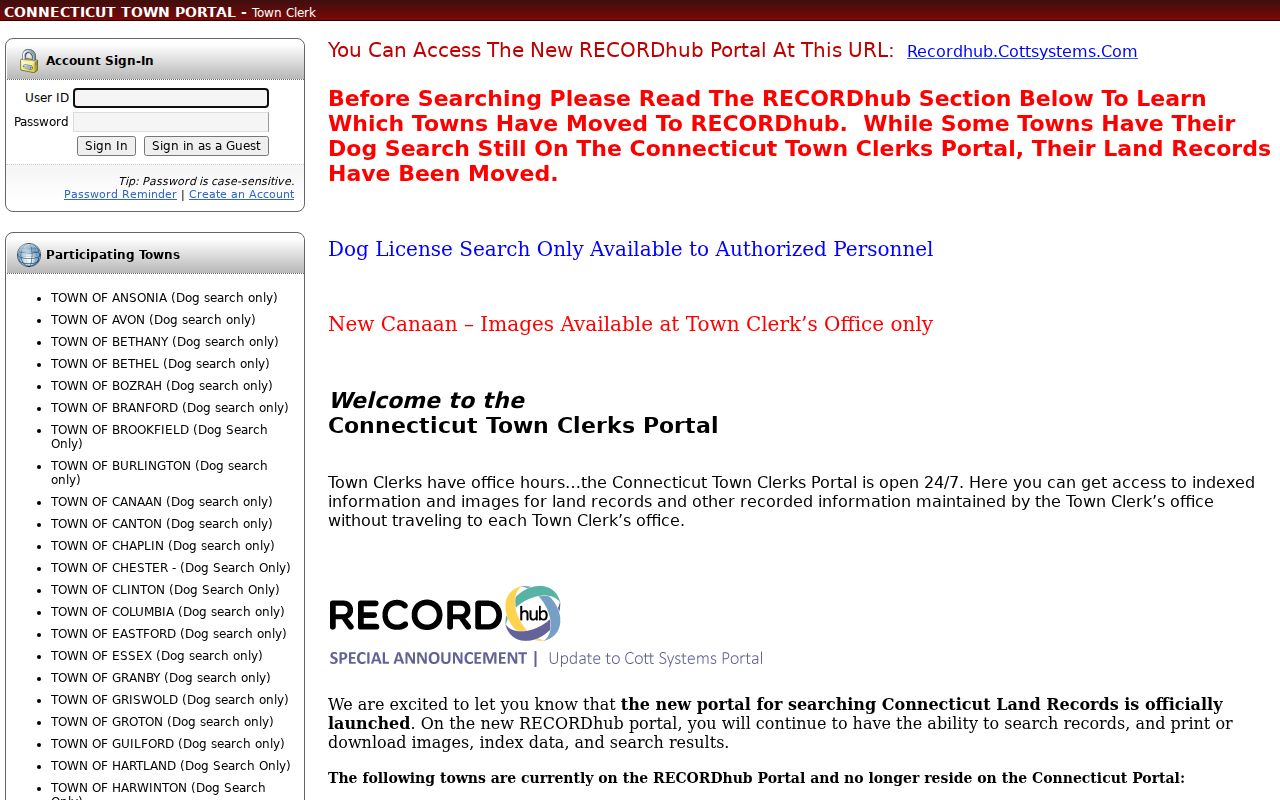
The New Canaan index is only a pointer. The official instrument, office copy, map, or legal description is the evidence that closes the deed chain.
New Canaan Historical Records by Era
New Canaan's official zoning certificate guidance lays out a concrete two-office route. Field cards from 1930 to the present sit with the Assessor. Cards older than 1965 live at the New Canaan Museum & Historical Society. The same guidance points to surveys, permits, and certificates of occupancy. These records date a building's physical changes. They work even when the deed trail goes quiet.
The Historical Society holds property files, Landmark Homes material, mid-century architecture files, and a demolished-house index. That index matters when a modern New Canaan parcel seems to have lost its earlier building. Ask by address. Bring the owner name, road spelling, and year range. Not every year has a card. A building record does not name every occupant.
Use the New Canaan Historical Society's library and resources page to ask about the property file, field card, or demolished-house index. The collection bridges modern parcel cards and older addresses.

A New Canaan field card adds property history. Directory pages and census schedules still supply the household snapshot that cards cannot.
New Canaan Building Records by Date
Sanborn fire-insurance sheets for New Canaan survive for 1884, 1889, 1895, 1901, 1906, and 1912. Each sheet traces building footprints, street labels, and land-use clues across the town. They name no residents, though. Set a Sanborn sheet beside a Town Clerk map, a current GIS parcel, a field card, a permit, and a directory address. You can then see whether a structure or street label shifted between editions.
Each record type answers a different sliver of the house-history question. A permit dates a renovation or certificate of occupancy. A map lays out lot relationships. A deed transfers an interest. A directory, meanwhile, names a listed subscriber or occupant at the address. Resist fusing them into one claim just because they share a road name. The New Canaan residents directory entry, the deed, and the map each stand on their own evidence. Start with the 1884 New Canaan Sanborn map as a visual anchor. Then work forward through the later dated sheets. The series bridges neatly to the modern GIS viewer.
New Canaan Directory and Census Years
Directories and census pages each hold half the story. A New Canaan directory can pin a name to a street address in a given year. The federal census adds household relationships, ages, birthplaces, and occupations at its enumeration date. Under the 72-year rule, 1950 is the latest generally public federal census. Neither source replaces the other. Treat a directory entry as a street-directory fact. Treat a census page as a household snapshot. Never use either one as a live address check or a one-for-one swap.
- Find the name in a verified New Canaan or combined Darien/New Canaan directory year.
- Copy the New Canaan street spelling, number, municipality label, initials, spouse notation, and occupation.
- Check the nearest public census year in NARA, FamilySearch, Ancestry through the Library, or another named collection.
- Compare household members, ages, and geography without forcing every name into the same household.
- Use a deed, obituary, probate file, or later directory to explain a move, death, marriage, or ownership change.
The New Canaan Library offers genealogy resources and in-library databases worth tapping. Its public page stops short of listing a complete New Canaan shelf run. Ask staff directly about exact titles, years, microfilm, and database access.
New Canaan Past Households and Probate
Household-level sources often surface New Canaan past residents faster than a deed will. The NARA table includes selected Darien runs covering New Canaan. A secondary catalog reaches New Canaan and combined volumes through the 1980s. It has gaps, and shelf holdings need confirming at the desk. A Library of Congress telephone reel from 1952–1955 lists subscriber names and roads. Unlisted numbers and non-subscribers simply do not appear there.
Newspapers and obituaries explain why a name vanishes from the residents directory. Probate names an executor or heir after a death. A cemetery catalog is only a lead. The New Canaan Historical Society and the Library can open doors to the Advertiser, the Messenger, and the Gazette. They also reach church registers, cemetery material, and local family files. Keep the article date, collection title, and holding institution beside every New Canaan name you carry forward. The New Canaan Library genealogy and history resources are the practical starting point. Use them for local newspaper, census, and directory work.
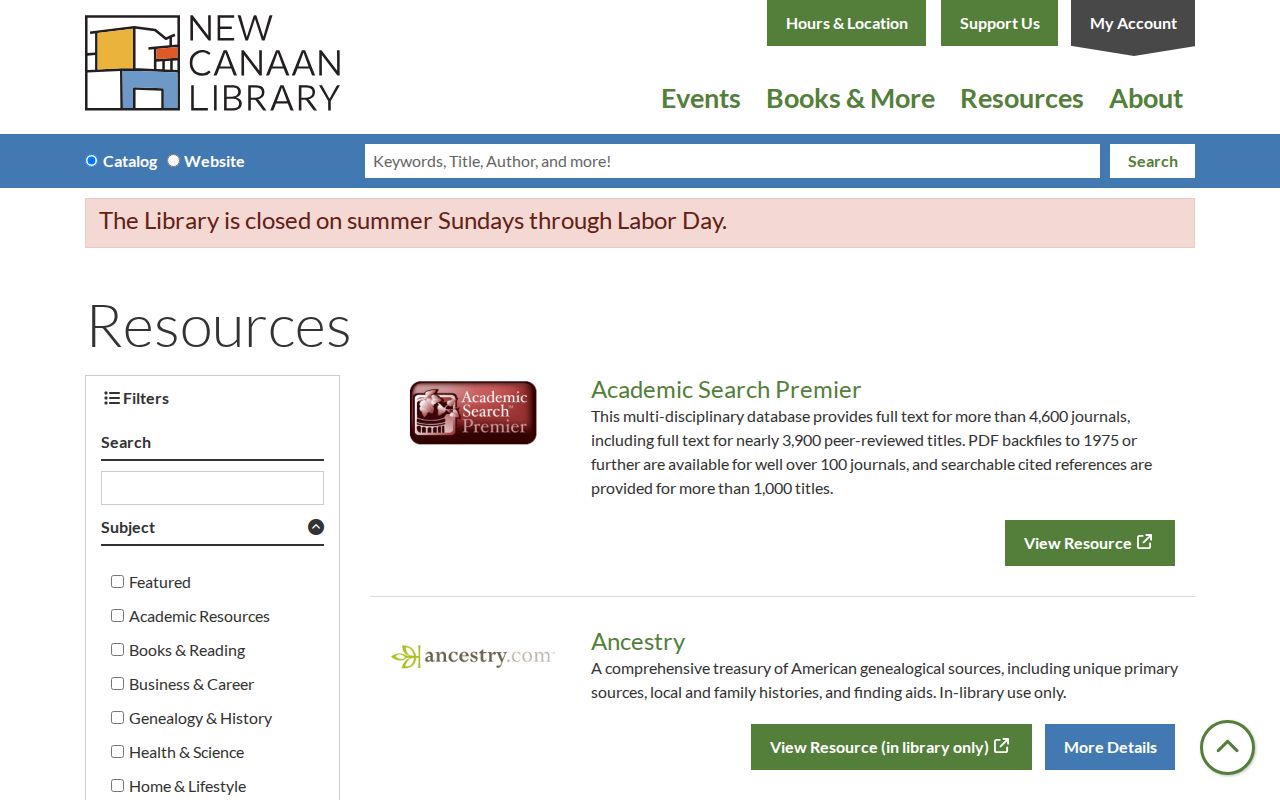
A library database can hand you a dated lead in minutes. The named collection and the New Canaan custodian decide how that lead gets verified.
Lawful New Canaan house history. Research into past residents is appropriate for family history and property history. Do not use an old New Canaan address, obituary, or directory entry to track, harass, threaten, or repeatedly contact a living person.
New Canaan Street Records Need Maps
Official New Canaan records show no dated street renumbering, annexation, or record loss. That silence is a limit, not a license to assume a number never changed. Search the former owner, the old road spelling, and the map and lot. Also search the legal description, nearby parcels, and the municipality label. A combined Darien and New Canaan directory can file the same locality under a different section. A modern ZIP code directory would file it under another.
New Canaan split from Norwalk and Stamford in 1801. That parent-town history is the reason. A church register, deed, directory, or family file may still carry an older Norwalk or Stamford label. Postal names add a second caution. Compare the ZIP, street name, and mailing city against the legal town and parcel key. Treat them as clues, never as interchangeable proof of where a record lives.
Note: Preserve the old wording in a source field and add the modern interpretation separately; silently normalizing an address can erase the clue needed to find the next record.
New Canaan Historical Society Files Close Gaps
The New Canaan Museum & Historical Society research library sits at the Town House, 13 Oenoke Ridge. Its shelves hold more than 3,500 volumes. Family records also reach across New Canaan, Stamford, Norwalk, and Pound Ridge, New York. The address-keyed property files alone make it worth the trip. Add biographical cards, deeds, old newspapers, town tax and real-estate records, business indexes, architectural files, and a demolished-house index. Together they give you a strong human fallback when the web trail goes cold.
Visits run Tuesday through Saturday, 10 to 4, by appointment. Research help costs $20 per hour for members and $40 for nonmembers. Ask whether a New Canaan file is on site. It may be digitized, cataloged, or available only through staff research. Give the librarian a precise address and a year range. A request like "find everyone who lived here" is far too broad to be useful. Contact the New Canaan Historical Society research library for an address file, card, newspaper, or former-house lead. A staff answer can point to the next collection. When a legal fact is at stake, still check the answer against the original record.
What New Canaan Previous Residents Cannot Show
Every record has limits. A New Canaan deed names a recorded interest holder, never the whole household. A city directory lists subscribers. It also lists occupants it captured, not everyone at an address. A census is a snapshot from one date, not a live roll of the town. Permits identify a project or applicant, not the people living inside. Obituaries preserve relationships as published, nothing more. Keep each source's own wording intact when you cite it.
Owner and occupant can be different people. A protected voter may stay out of any public voter roll. Some people appear in no accessible record at all. A child, roommate, caregiver, or unlisted phone subscriber in New Canaan can be one. When the public chain stops, say so plainly. A gap beats a guessed household.
Ask for Older New Canaan Instruments
Sometimes the paper trail runs out online. That is when the counter work starts. The New Canaan Town Clerk can pull vault books, microfilm, filed maps, office images, or answer a written request. Hand the custodian the newest verified parcel key and trace backward from there. Connecticut FOI, Conn. Gen. Stat. §§1-200–1-242, opens non-exempt municipal records when a request is precise. It cannot unlock restricted vital, voter, court, adoption, or private data.
Each office owns one piece. The New Canaan Assessor handles cards and parcels. The Town Clerk holds recorded instruments and maps. The Building Department keeps permits, the New Canaan Library keeps directories and newspapers, and the Historical Society keeps property files and older cards. NARA or FamilySearch carries census records, while Probate holds estates. Together these channels make a New Canaan previous-residents search durable.
Note: The exact online land-index cutoff was not located in official sources, so ask the Town Clerk where a web search should hand off to an office record.
The goal is simple. Build a dated, source-labeled New Canaan address history that stays rich without claiming more than the records themselves prove.